
Weddings · 19 October 2026
Spain vs Italy for a destination wedding: an honest comparison
Spain and Italy end up on the same shortlist more often than any other pair of countries, usually because both promise the same thing: good light, old stone, food worth travelling for, and a sense of occasion that a marquee in a field back home cannot match. Couples then spend weeks trying to work out which one actually suits them, and most of that research compares photographs rather than the things that decide how your wedding week will actually run. Here is the comparison without the brochure language.
The legal question is nearly identical in both countries
Couples often assume Italy is the simpler option legally, because it has a longer history of hosting foreign weddings. In practice, both Spain and Italy set real requirements for a civil marriage involving two foreign nationals, and in both countries the paperwork is slow enough that most couples choose to marry legally at home and hold a symbolic ceremony on the day that matters to their guests. We cover the Spanish side of this in detail here, and the short version transfers almost exactly to Italy: a legal marriage at home first, then a ceremony here that is entirely yours to write, with no civil minimums to satisfy and no risk of a document arriving late in the wrong language. This is not a point in either country's favour. It simply means the legal question should not be the one that decides between them.
Cost: the real driver is the wedding industry, not the country
Italy's wedding industry, particularly in Tuscany and on the Amalfi Coast, is older and larger than Spain's international wedding market, and that size cuts both ways. There is more choice of venue and supplier, but also more competition for the dates and photographers everyone wants, which tends to push prices up rather than down once you are comparing like for like. Andalusia's destination wedding market is smaller and younger, which usually means less competition for the same September Saturday and more room to negotiate with suppliers who are not already booked eighteen months out. Neither country is simply cheaper than the other. What actually moves the number is whether the venue runs exclusive use or shares the grounds with other events, how saturated the local supplier market is for your date, and how far your guest list has to travel, which brings its own cost before a single flower is ordered.
Getting your guests there
Flight access shapes both countries differently depending on where your guests are flying from. Tuscany's nearest airports, Florence and Pisa, carry fewer direct long-haul routes than Spain's main hubs, which often means a connection through Rome or Milan for guests travelling from the US. Andalusia has the reverse problem in reverse: Granada's own airport, Granada-Jaén, is small and mostly domestic, but it sits forty minutes from a Lecrín Valley estate, and Málaga, about an hour and fifteen minutes away, carries considerably more direct routes from the UK, Ireland and northern Europe than either Florence or Pisa. For a British or Irish guest list, Spain is usually the more direct route. For a US East Coast guest list, the two countries are closer to level, and it is worth checking actual route maps for your guests' home airports rather than assuming either country has the clear advantage.
Weather and how long your usable season actually is
Central Italy and inland Andalusia share more of a climate than either brochure admits. Both regions run hot and dry through July and August, both cool down noticeably by October, and both reward a couple who is willing to marry in late May or September rather than fighting for a date in peak summer. The full month by month breakdown for Andalusia is specific to the Lecrín Valley rather than Italy, but the underlying logic travels well: altitude matters more than latitude, and an inland valley between two mountain ranges tends to cool down faster after sunset than either a flat Tuscan hillside or a coastal Italian town, which affects how comfortable an evening reception actually feels in August far more than most couples expect before they have sat through one.
- Does the legal marriage actually need to happen in this country, or can it happen at home before you travel?
- How saturated is the local wedding market for your date, and does that push your quoted price up?
- Which airport do most of your guests actually fly into, and how many changes does that route involve?
- Is the venue yours exclusively for the whole day, or does it run more than one event on busy weekends?
Exclusivity: a question to ask in both countries, not just one
A well-run private estate in Tuscany typically offers the same exclusive use a Spanish hacienda does, so this is not where the two countries genuinely diverge. The real difference shows up in volume: a smaller number of foreign weddings in Andalusia means a higher proportion of private estates are willing to block an entire weekend around your date rather than turning the grounds over the following morning for setup on someone else's celebration. It is a question worth asking directly of any venue in either country, because the answer rarely appears on the website and matters more to how your wedding day actually runs than which coastline appears in the drone shot.
So which country actually wins
Neither, in the sense most couples are asking the question. Italy has the longer track record and the denser supplier network, which suits a couple who wants everything handled by people who have done this exact thing a thousand times before. Spain, and inland Andalusia specifically, suits a couple who wants a genuine three-city comparison within the region first, more room to negotiate on a less saturated date, and a wedding week that does not compete with the Tuscan summer's wall of other foreign weddings happening in the same hill towns on the same Saturdays. The fuller list of questions to put to any venue in either country covers catering rules, set-up days and rain plans, all of which matter as much as the country on the invitation once you start comparing seriously.
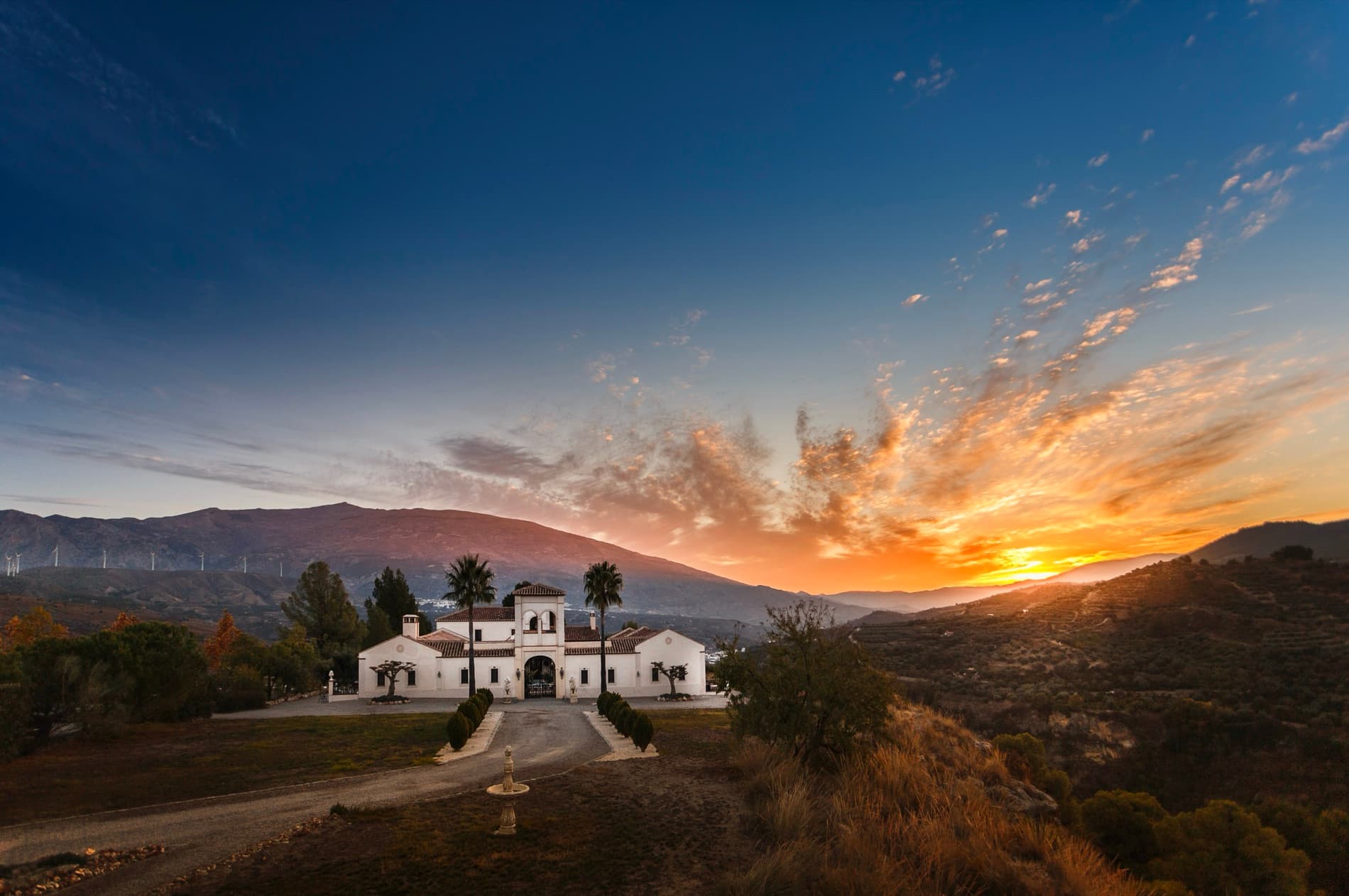
At La Esperanza, in the Lecrín Valley between Granada and the Costa Tropical, exclusive use means the five-hectare estate belongs only to you on your date, with seven bedrooms sleeping up to 21 guests and no catering exclusivity to negotiate around. If Spain and Italy are both still on your list, get in touch about the estate and we will give you a straight answer on cost and logistics for the numbers you actually have, rather than a sales pitch for one country over the other.