
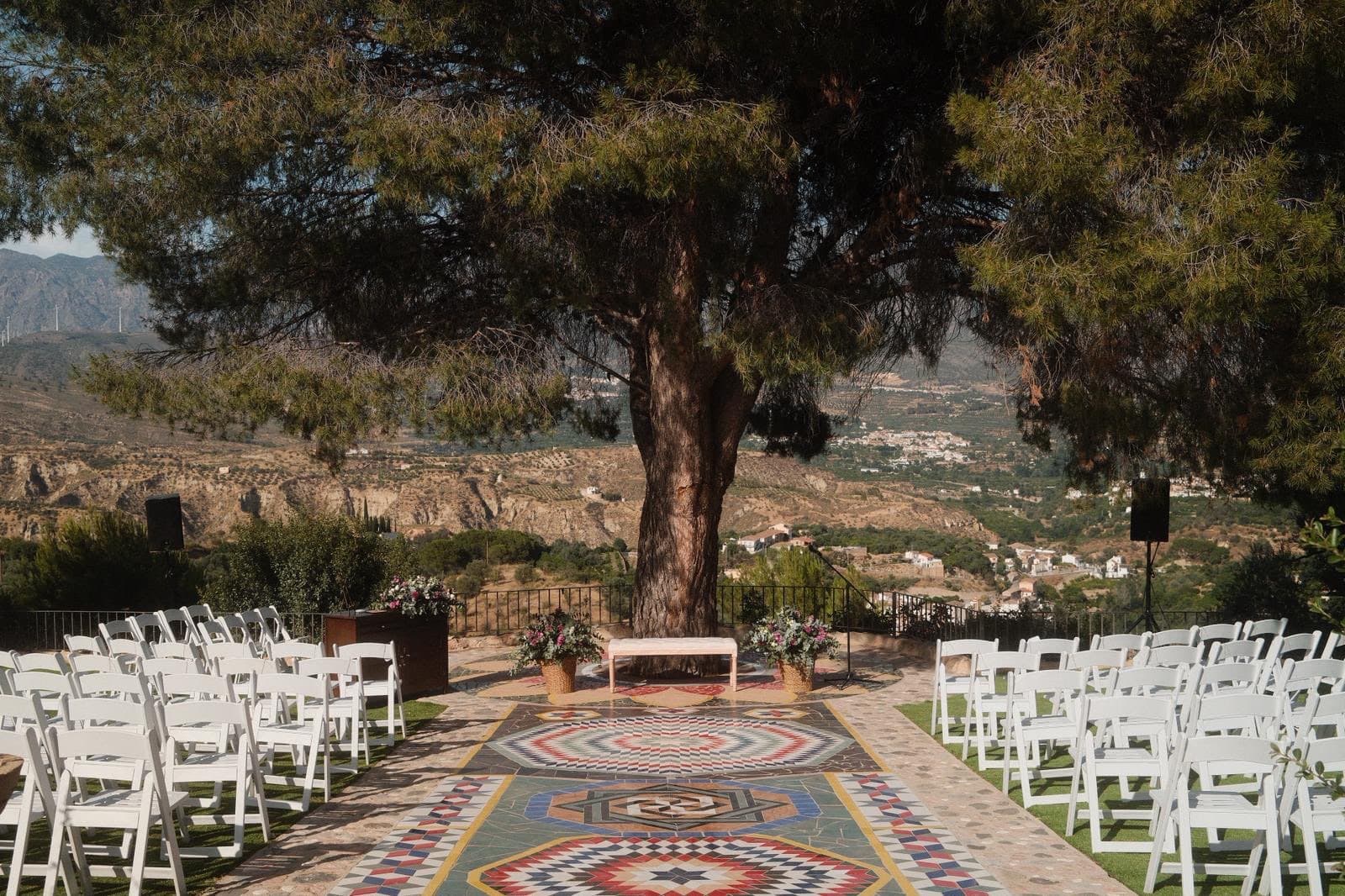
Weddings · 1 September 2026
Getting married in Spain as a foreign couple: legal, symbolic and what nobody explains
Sooner or later every couple writing to us from abroad arrives at the same worried email. They have found the place, they have half a date in mind, and then somebody has told them that getting legally married in Spain as a foreigner is complicated. They want to know whether the whole idea falls apart.
It does not. But the answer is not the one most people expect, so it is worth setting it out plainly before you spend months on the wrong assumption.
The legal bit and the day are two different things
In most countries people treat the wedding as a single event: you sign, you celebrate, it happens in one afternoon. In destination weddings that stops being true, and once you accept it a lot of anxiety disappears.
What the overwhelming majority of international couples do is this. They complete the legal marriage at home, quietly, in a registry office, with two witnesses and no fuss. Sometimes weeks before, sometimes days. And then they come to Spain and have the wedding: the ceremony their guests will remember, the vows they actually wrote, the dinner, the dancing, the whole thing.
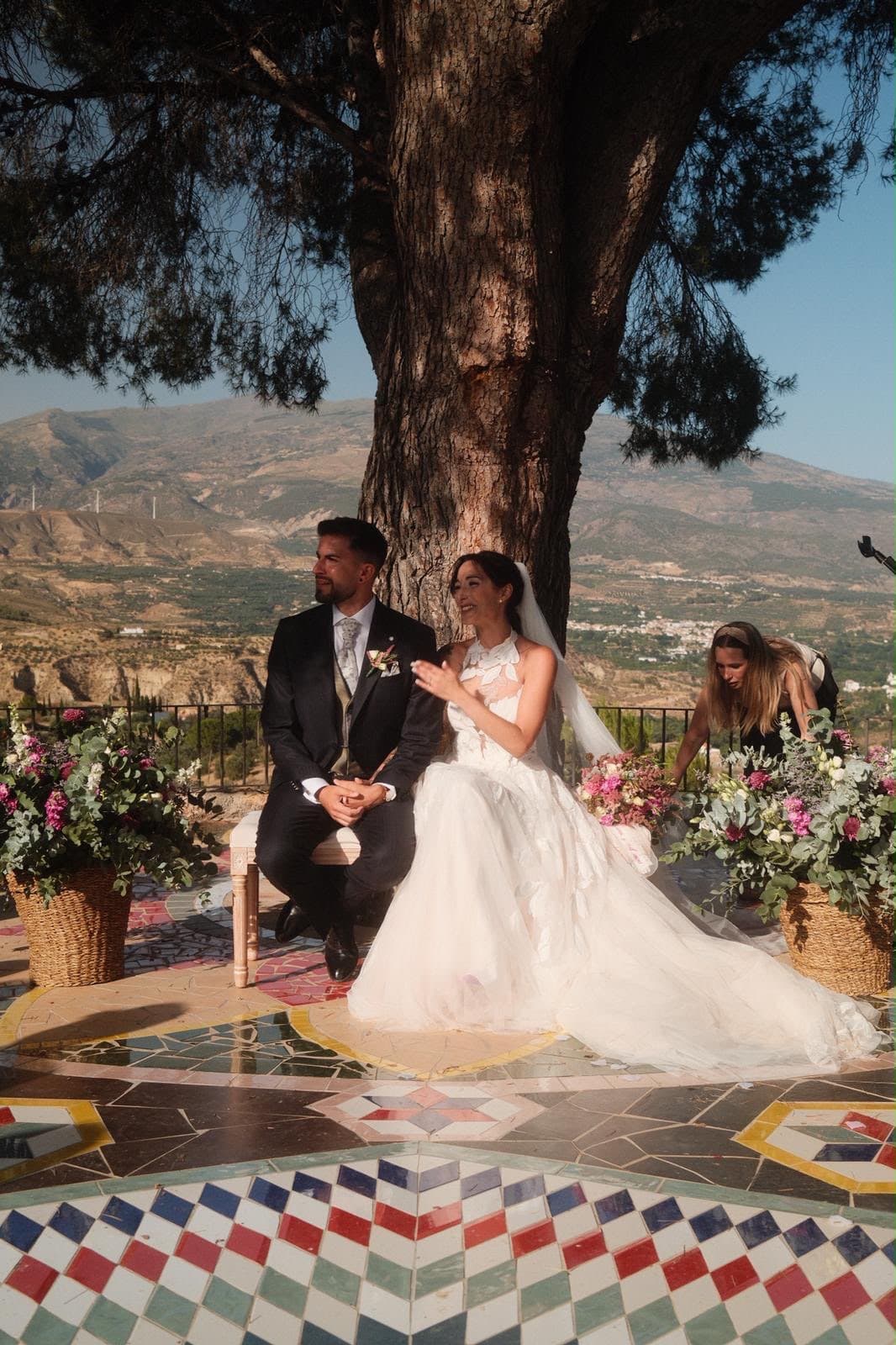
That second ceremony is what is usually called a symbolic ceremony, and the name does it a disservice. Nothing about it feels symbolic on the day. Your officiant can be a friend, a celebrant or a family member. You can write whatever you like, in whatever language you like, and take as long or as little as you want, which is a freedom a civil registry will never give you. Nobody at your wedding will know or care which piece of paper was signed where, unless you tell them.
Can foreigners marry legally in Spain? Sometimes, but check first
A civil marriage in Spain is opened with a file at the Registro Civil, and the requirements depend heavily on your circumstances and on the particular office. Residency, nationality and where each of you is registered all matter, and the answer for a couple who live in Spain is very different from the answer for two people flying in for a week. Timescales vary too, and they are usually measured in months rather than weeks.
We are a venue, not a legal adviser, and this is one of those subjects where a confident answer from the wrong source costs people real money. So the only responsible thing we can tell you is: if you want the legal marriage itself to happen in Spain, ask the Registro Civil that would correspond to the place, and ask your own consulate, before you book anything. Get the answer for your situation, in writing, and get it early.
A religious wedding follows a separate path through your own parish or community, and again the paperwork starts a long way ahead. If that is your plan, speak to them first and let the date follow, rather than the other way round.
Why the usual route is the good one
Couples sometimes hear all this and feel slightly cheated, as though the real wedding is the boring twenty minutes in a municipal office at home. In practice it works the other way round. Signing at home removes every piece of administrative risk from the day that matters. No document goes missing in the post, no appointment gets moved, no translation arrives late, nobody spends the week before their wedding on the phone to an office in a language they do not speak.
It also means your ceremony here is entirely yours. There is no set text to get through and no legal minimum to satisfy. We have seen ceremonies of fifteen minutes and ceremonies of forty five, in two languages, with a friend officiating and a grandmother reading. That flexibility exists precisely because the legal work is already done.
What to sort out, and roughly when
None of this is heavy, but it is all easier a year out than three months out.
- Decide early whether you want the legal marriage at home or in Spain, because that single choice changes your timeline more than any other.
- If you are going the usual route, book your registry appointment at home before you finalise the date here, not after.
- Find your officiant early. A friend or a professional celebrant both work, but a good one shapes the whole ceremony and the best are booked well ahead.
- If you want the ceremony in two languages, say so from the start. It changes the length, the running order and how the readings are spread.
- Ask your venue what it needs from you and when. Ours is little more than the timings, the guest number fifteen days out and a contact person we can call on the day.
- Keep a copy of your marriage certificate somewhere you can reach it. Not for us, but because you will need it for a surprising number of things afterwards.
And then the part that actually matters
Once the paperwork stops being a question, everything else opens up. Where the ceremony happens, at what hour, how long the drinks last, whether people eat outside, what time the music stops. Those decisions make the day, and they are the ones worth your attention.
We hold one wedding per date, with the whole estate given over to it, so there is no schedule to fit around and no other couple waiting for the good light. Up to twenty one people can sleep here in the rooms and suites, which usually means the family who need to be on site at seven in the morning and at the breakfast table the next day.
If you are at the stage of wondering whether any of this is feasible from abroad, write to us at info@laesperanza-hotel.com and tell us where you are both from. We cannot give you legal advice, but we can tell you what other couples in your situation have done, and point you at the right door.