
Weddings · 26 October 2026
Inland Andalusia or the coast: what changes for your wedding photographs
Most couples comparing inland Andalusia against the Costa del Sol are really comparing weather and cost, or weighing up Granada against Seville and Marbella on altitude and airports. Those comparisons matter, but there is a quieter difference that rarely comes up in either conversation: what the venue actually does to your photographs, hour by hour, long before anyone mentions the camera.
Coastal light: generous at sunset, hard work at noon
A beach wedding sells itself on one picture: the couple silhouetted against the sea at golden hour. It is a real and lovely shot, and it is also the only hour of the day that reliably delivers it. Between roughly eleven and four, direct sun bouncing off open water and pale sand produces a flat, high contrast light that makes guests squint, casts hard shadows under eyes and noses, and leaves a photographer working around the light rather than with it. Humidity near the coast adds a soft haze that can mute colour and contrast in the background of a shot, which is part of why so many coastal wedding galleries lean so heavily on sunset and so lightly on the ceremony itself.
Inland light: slower to flatter, but flattering for longer
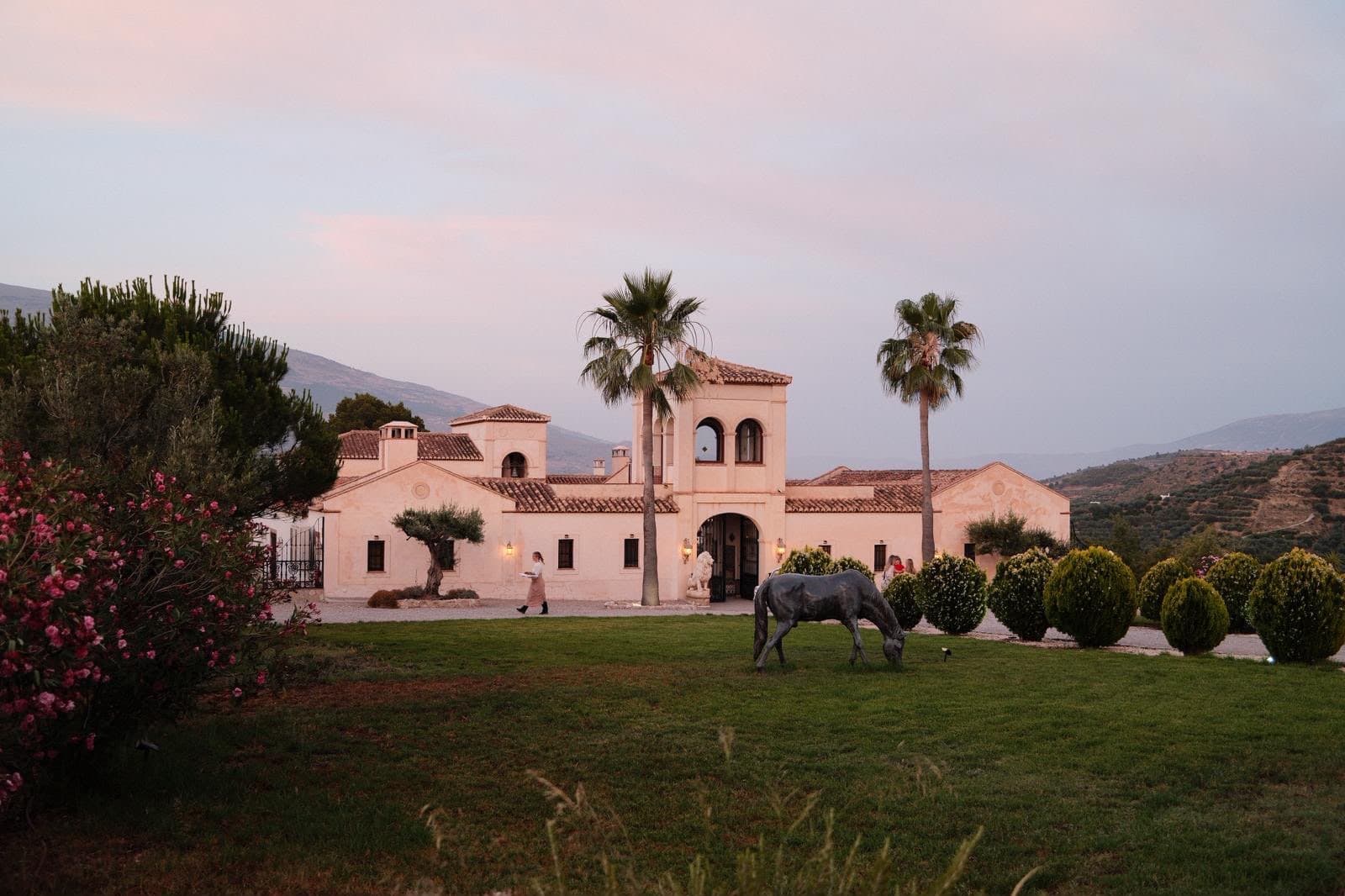
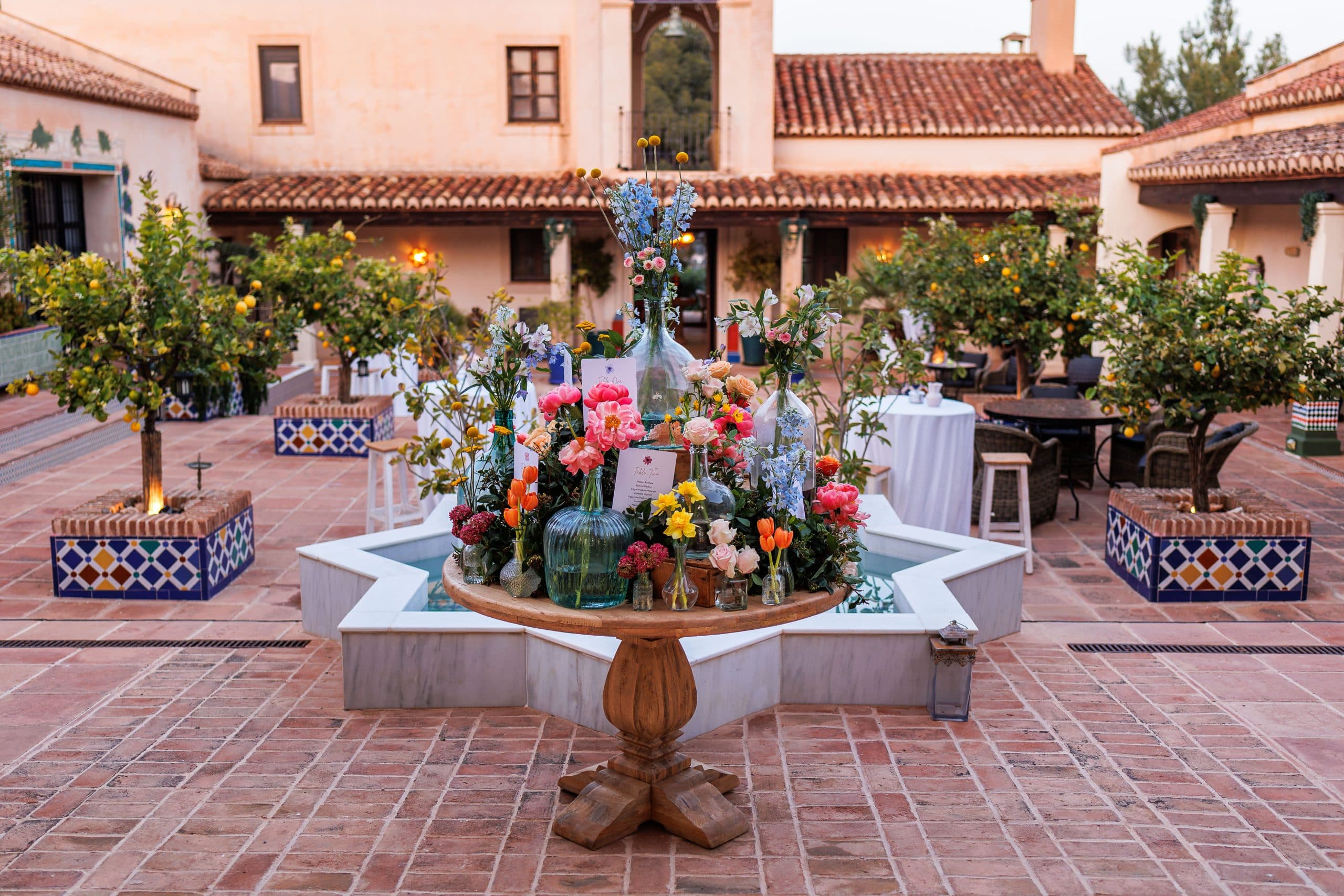
Move inland and the equation changes. Granada sits at altitude in a valley between Sierra Nevada and the coast, and the air is noticeably clearer: less humidity haze, more defined shadow and colour even at midday, and a longer stretch of the day that photographs well rather than one narrow slot either side of sunset. A courtyard or a garden with mature trees also gives a photographer dappled shade to work with at midday, something an open beach simply cannot offer. None of this makes a sunset over Sierra Nevada any less dramatic than one over the sea. It means the sunset is a highlight rather than the only usable hour.
What this does to your actual timeline
This matters most in how your day gets scheduled, not just how it looks. A public or semi-public beach usually means a booked slot: a set window when the sand is yours, after which another couple, a lifeguard rota or simply the tide takes over, which pushes the ceremony and the photographs into a tight sequence timed to one sunset. An estate run on exclusive use removes that constraint entirely: the grounds are yours from morning to the last dance, so the photographer can work the garden at midday, the courtyard in the afternoon and the terrace at sunset without racing a schedule set by anyone else.
The cost side nobody mentions: permits and crowds
Professional photography and drone work on public beaches in Spain typically needs a permit from the local council, and popular stretches of coast draw sunbathers, dog walkers and other weddings most weekends from spring to autumn, all of whom end up in the background of a shot unless you pay for an early or very late slot. A private inland estate sidesteps both problems: no permit queue, no stranger wandering into the frame, and no extra fee for a crowd-free hour. The fuller list of questions worth asking any venue before you book covers this alongside catering and set-up days, and it is worth asking a coastal venue directly how they handle public access on your date.
- Is the beach or shoreline private to the venue, or public access that happens to run past it?
- Does a drone shot need a permit, and who is responsible for getting it?
- How many hours of exclusive use do you actually have for photographs, not just for the ceremony?
- What does the venue look like in your photographs at midday, not just at the one hour everyone shows in the brochure?
You don't have to choose only one
Because La Esperanza sits inland and the Costa Tropical is only 35 minutes away, some couples choose both without complicating the wedding day itself: the ceremony and reception happen on the estate, in exclusive use and photographed through the whole day as above, then a short coastal session is booked separately, the next morning or later in the week, purely for the sea backdrop everyone pictures when they imagine a beach wedding. It avoids the permit and crowd problems of shooting a full wedding on public sand, and it means the pressure of a single sunset slot never sits on top of your actual wedding day.
After sunset, the photographs don't have to stop
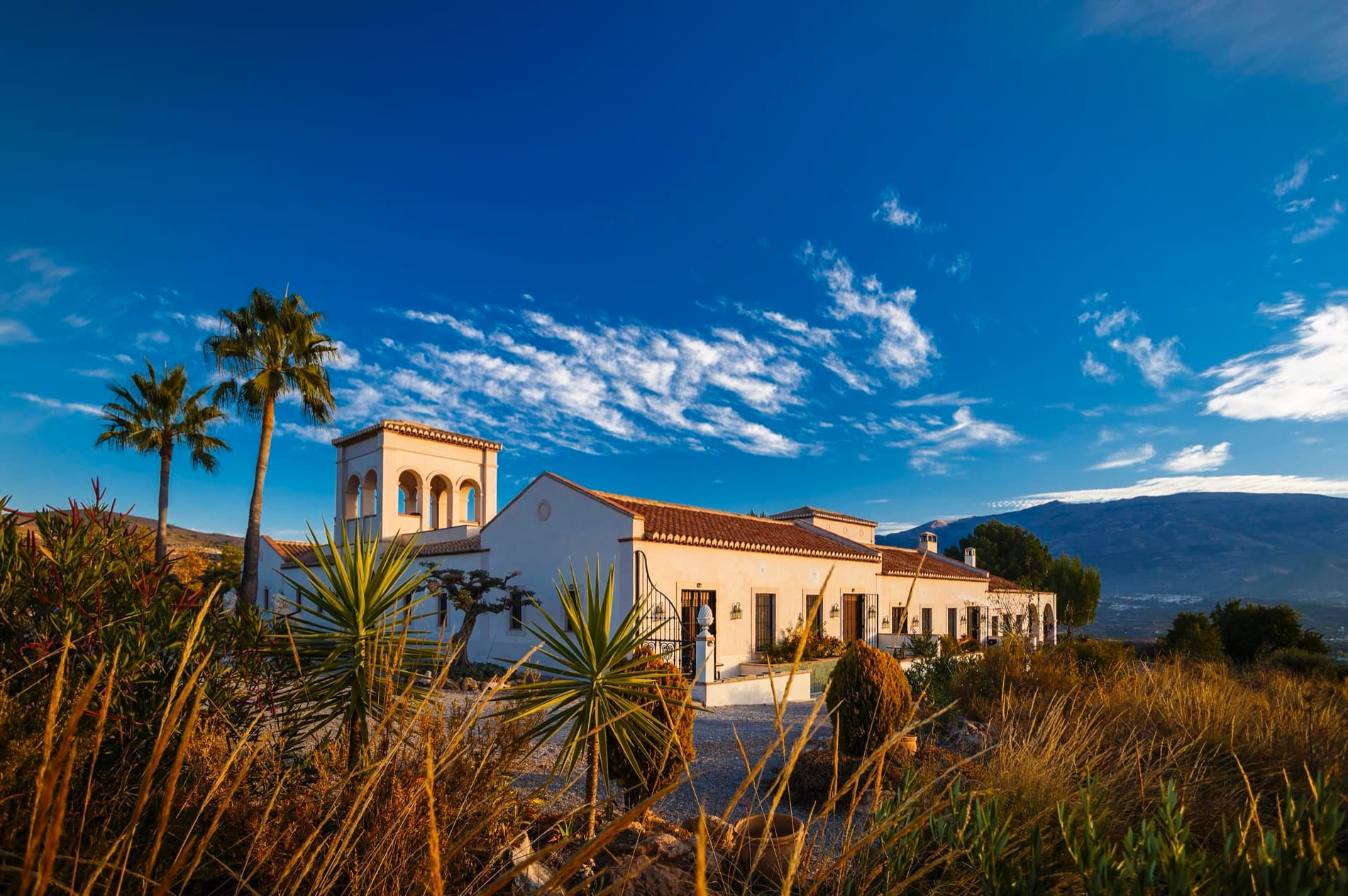
A coastal reception usually keeps the camera working under string lights and a marquee once the sun goes down, because the sky above a town or a resort strip rarely goes properly dark. Saleres, where La Esperanza sits, has almost no light pollution, so the hour or two after the last dance can still produce a usable shot: the hacienda lit from within, guests silhouetted against a genuinely dark, star-filled sky rather than an orange glow. It is a small detail, but it is one more hour of the album that a brighter coastal setting cannot easily give back.
So which one wins?
Neither, in the sense that one is simply better. A beach wedding at sunset produces a picture inland Andalusia cannot copy, and anyone who wants that exact shot should book the coast and plan the rest of the day around it. What inland Granada offers instead is a longer working day for the camera, light that holds its colour without needing to be rushed, and grounds that are yours regardless of the hour. A destination wedding at La Esperanza sits in the Lecrín Valley with five hectares of private garden and courtyard light to work with for the whole day, not just the last hour of it.
If you are weighing a coastal venue against an inland one and the photographs are part of that decision, get in touch about the estate and we can walk you through how the light and the schedule actually play out across a full day in the Lecrín Valley.