What your wedding guests actually do between the ceremony and dinner
Weddings · 5 November 2026
Couples planning a wedding abroad spend months on the ceremony and the first dance, and almost no time on the hour or more that sits between them. That gap, call it cocktail hour, call it the aperitivo, call it nothing at all, is where the formal photographs happen, where the couple disappears from their own party, and where guests are left to work out what to do with themselves. It decides more of how the day feels than either the ceremony or the dinner that follows.
The gap is longer than most couples budget for
A ceremony that ends at six rarely means guests sit down to eat before half past seven. Family group photographs take longer than anyone expects once you are organising six or seven combinations of people who have never stood for a camera together, and a couple who want portraits in the gardens or the golden hour light the valley is known for need another twenty minutes on top of that. An hour to ninety minutes is normal. Planned for, it barely registers. Left to chance, it is the part of the day guests remember as the bit where nothing happened.
Why it matters more here than at a wedding at home
At a wedding close to home, guests already know each other, and an unstructured hour just means old friends catching up. At a destination wedding, a good share of the guest list is meeting for the first time: your partner's university friends and your own family, your London colleagues and your partner's cousins from Seville. Shaping the rest of the weekend gets the attention, but this hour is the actual icebreaker, and it works far better with somewhere to stand and something to do than with a glass of cava and good intentions.
Give it a place, not just a drink
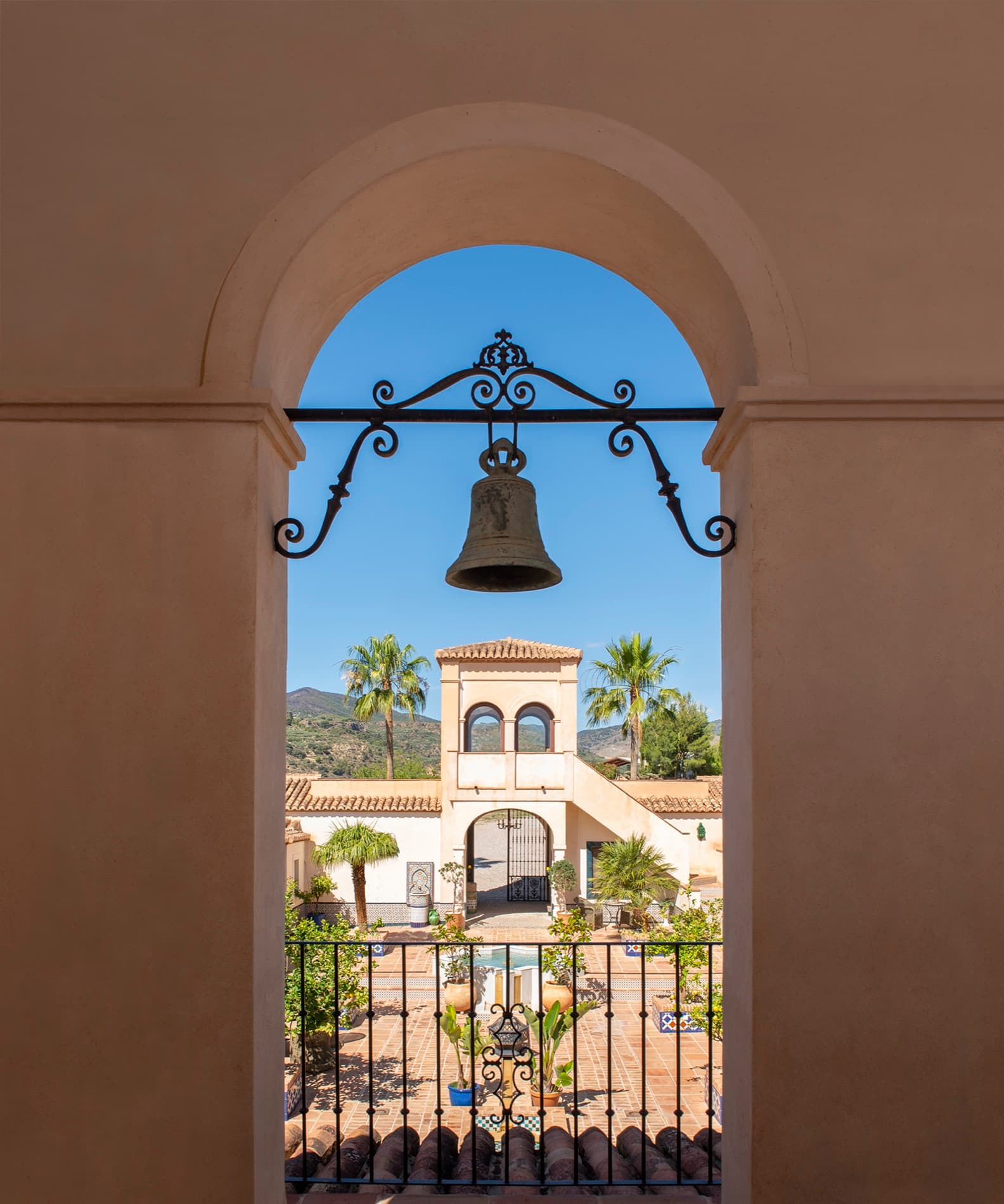
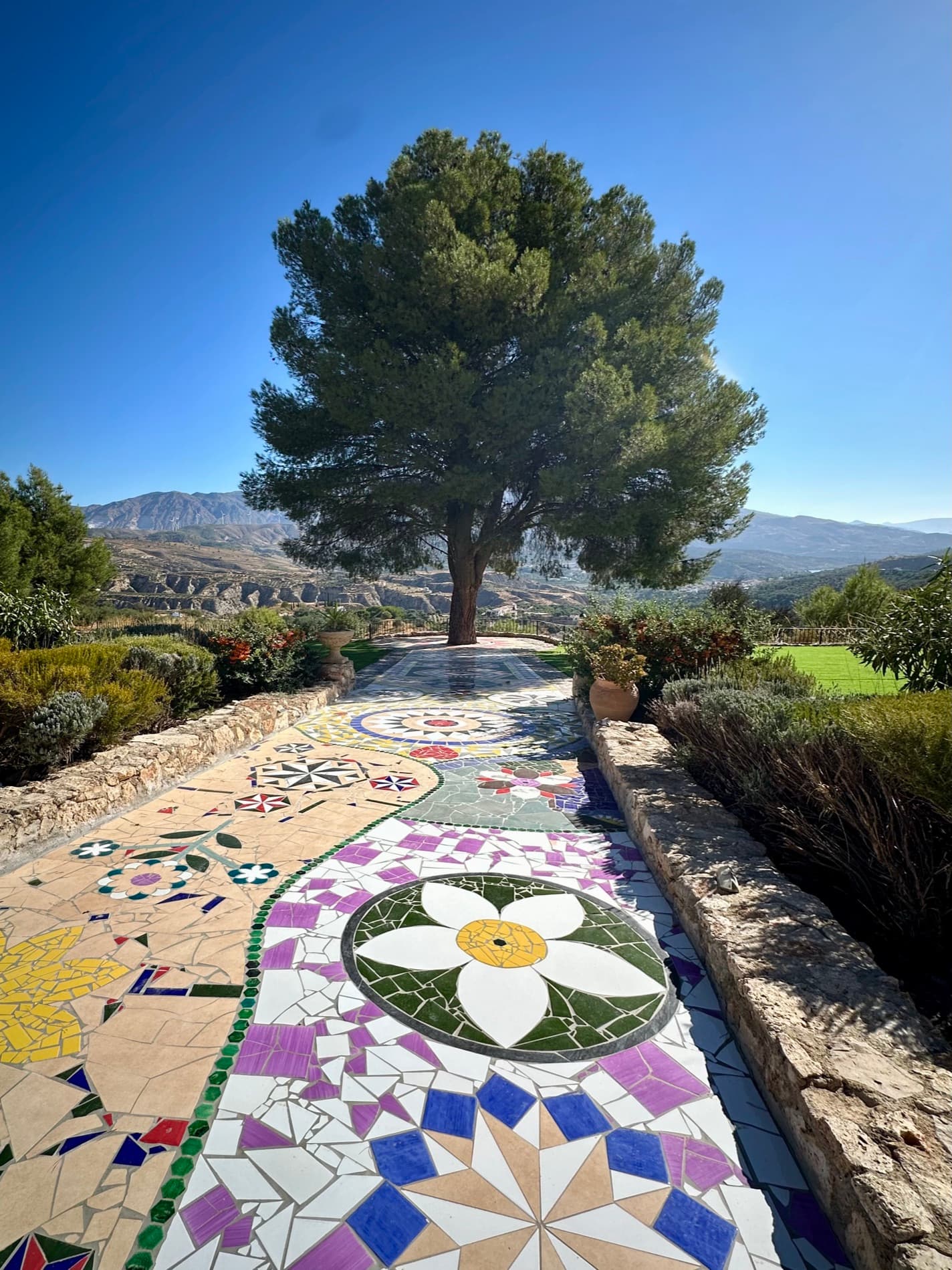
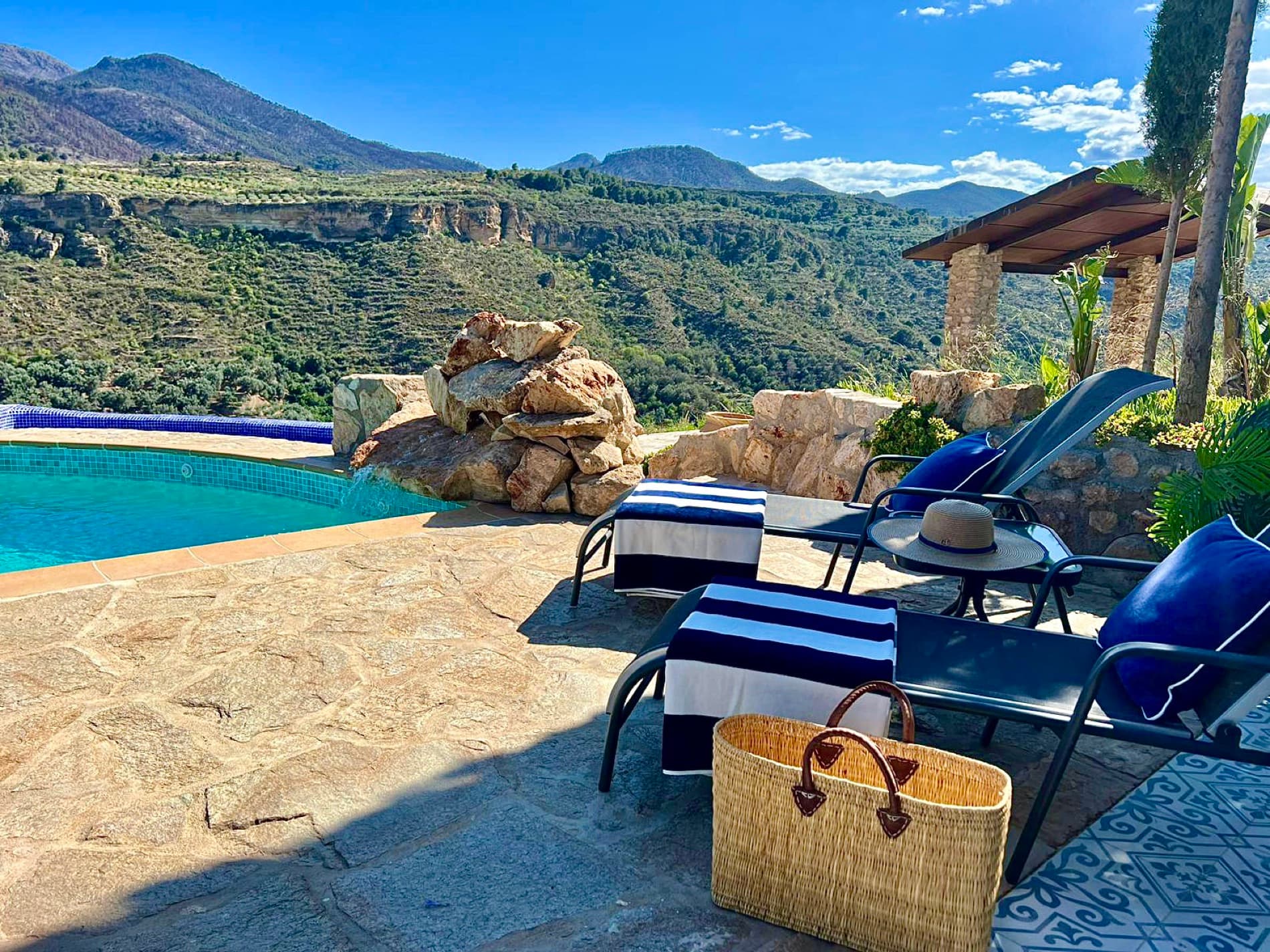
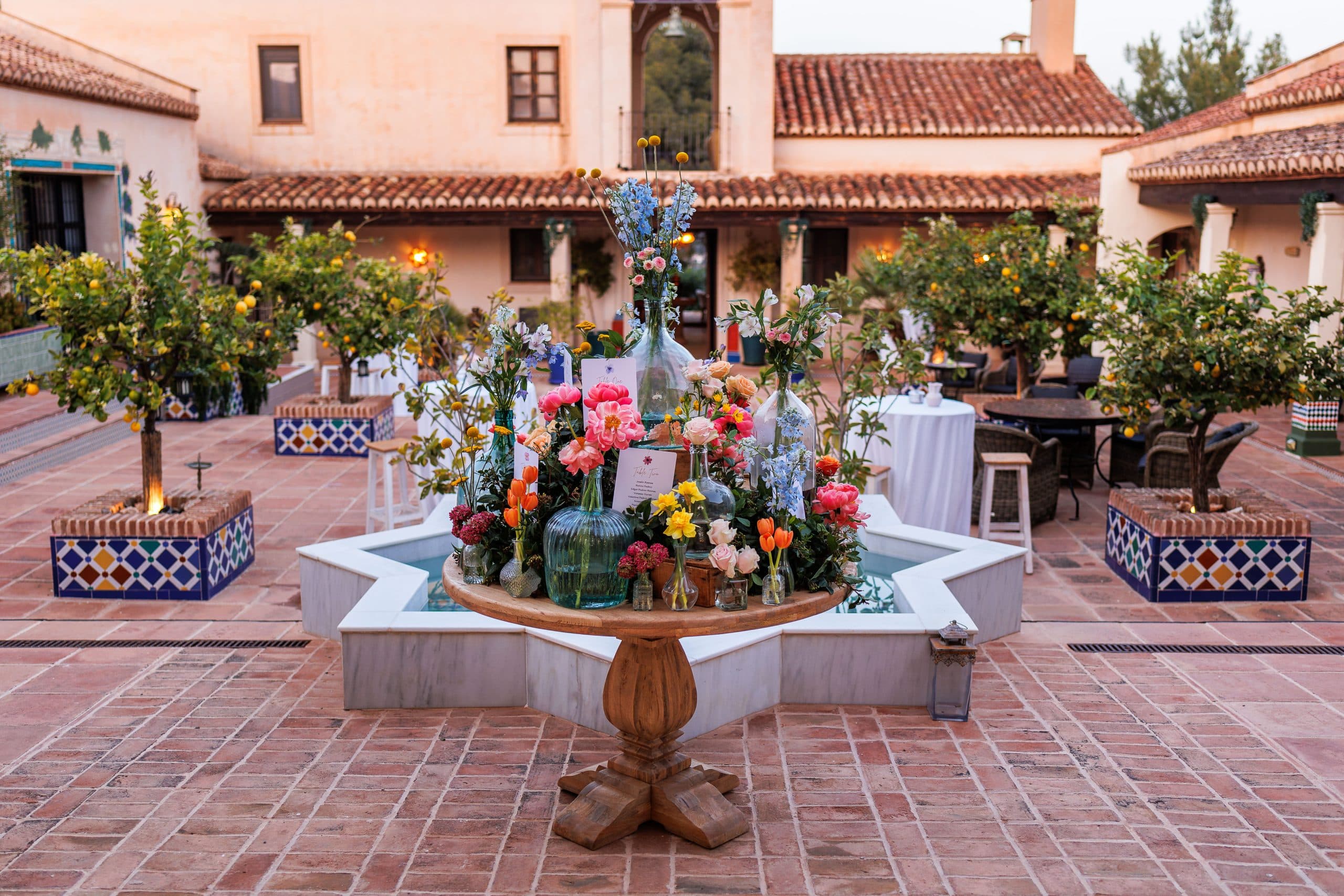
On a private estate with no other event sharing the grounds, the gap does not need to be contained to one terrace. Guests can move between the shaded courtyard, the gardens and the pool deck while photographs happen elsewhere, which matters more than it sounds in the Lecrín Valley's early-evening sun. An estate booked for exclusive use means nobody is rushing you off a lawn to reset it for the next client, so the hour can breathe instead of being managed to the minute.
Feed them properly, not four canapés on a tray
A few canapés passed once is not a meal, and ninety minutes on an empty stomach with wine is where the evening starts to go wrong before dinner has even been served. Food built around what the valley actually grows, a cured ham station, local cheese, warm croquetas, olives and bread with the estate's own oil, served continuously rather than in one pass, keeps the hour feeling generous rather than like a queue for the main event. Chilled fino or a local white does more for the mood here than anything flown in, and it costs less too.
Low-key beats booked
A hired act for this hour is usually wasted money. Guests are talking, drifting between groups, half-watching the light change over the valley, and a loud performance competes with that instead of supporting it. One guitarist playing quietly in a corner of the courtyard does more than a full band, because nobody has to stop a conversation to watch it. Resist the urge to fill the hour with a programme, since a destination wedding already asks a lot of people who have just got off a plane, and the kindest thing you can give them once they land is an hour where nothing is scheduled for them to do.
A printed card does more than an announcement
Guests who do not know the day's shape tend to hover near the exit of the ceremony, unsure whether they should be heading somewhere or waiting to be told. A single printed card, handed out as people leave their seats, naming roughly when dinner starts and where drinks are being served, answers that without anyone picking up a microphone. It is a small thing, and it is the difference between guests who relax into the hour and guests who spend it checking their phone for instructions that were never going to come.
What not to do with the hour
A formal receiving line sounds generous and usually backfires, turning ninety minutes into two hours while guests queue instead of talking to each other. The same goes for treating the gap like a corporate mixer, with name tags or a scheduled group activity competing for attention: people who have just watched you marry do not need an icebreaker game, they need a drink, some shade and permission to wander. The couple's time is better spent finishing photographs quickly than appearing briefly to greet everyone, since guests forgive an absent couple far more easily than a bored one.
- Pick one or two shaded spots and let people drift between them rather than funnelling everyone onto a single terrace.
- Serve food continuously through the hour, not in one pass of canapés at the start.
- Book one quiet musician over a full act, so conversation stays louder than the entertainment.
- Hand out a simple printed timeline as guests leave the ceremony, instead of making an announcement.
- Tell older guests and anyone with young children where the seating is before the ceremony starts, not after.
Grandparents and small children need a different gap
Not every guest wants to stand for ninety minutes holding a glass. A handful of guests, often the ones who flew the furthest, need somewhere to sit in the shade within a few steps of the drinks and the children's attention. At La Esperanza that usually means a run of chairs along the edge of the courtyard, close enough to the food that nobody has to walk far, and close enough to the lawn that a small child can be watched without anyone standing guard over them. It takes almost no planning, a line in the brief to your venue or wedding planner, and it is the detail that gets mentioned afterwards far more than the band ever does.
None of this needs a separate budget line or a planner's full attention. It needs the hour to be treated as part of the wedding rather than the pause between the parts that mattered. If you are working out how a Spanish wedding weekend fits together, from the ceremony photographs to the welcome dinner the night before, get in touch about the estate and we will talk through how other couples have used this hour well.